Google highlights four Gemini 3.8 Flash experiments, with important limits
Google’s post highlights four Gemini 3.8 Flash experiments: orbital-path visualization, animated ink-style waves, a prompted T. rex skeleton and an interactive automatic-transmission model. The post also makes capability and access claims, but the supplied record provides no independent benchmarks, project verification or current product-term confirmation.
This edition passed Imananq's enhanced publication checks. Some material claims remain explicitly attributed to official or company sources because no independent source is currently bound to this edition. The engine continues checking approved sources and will add corroboration only through a new edition that passes the full gate.
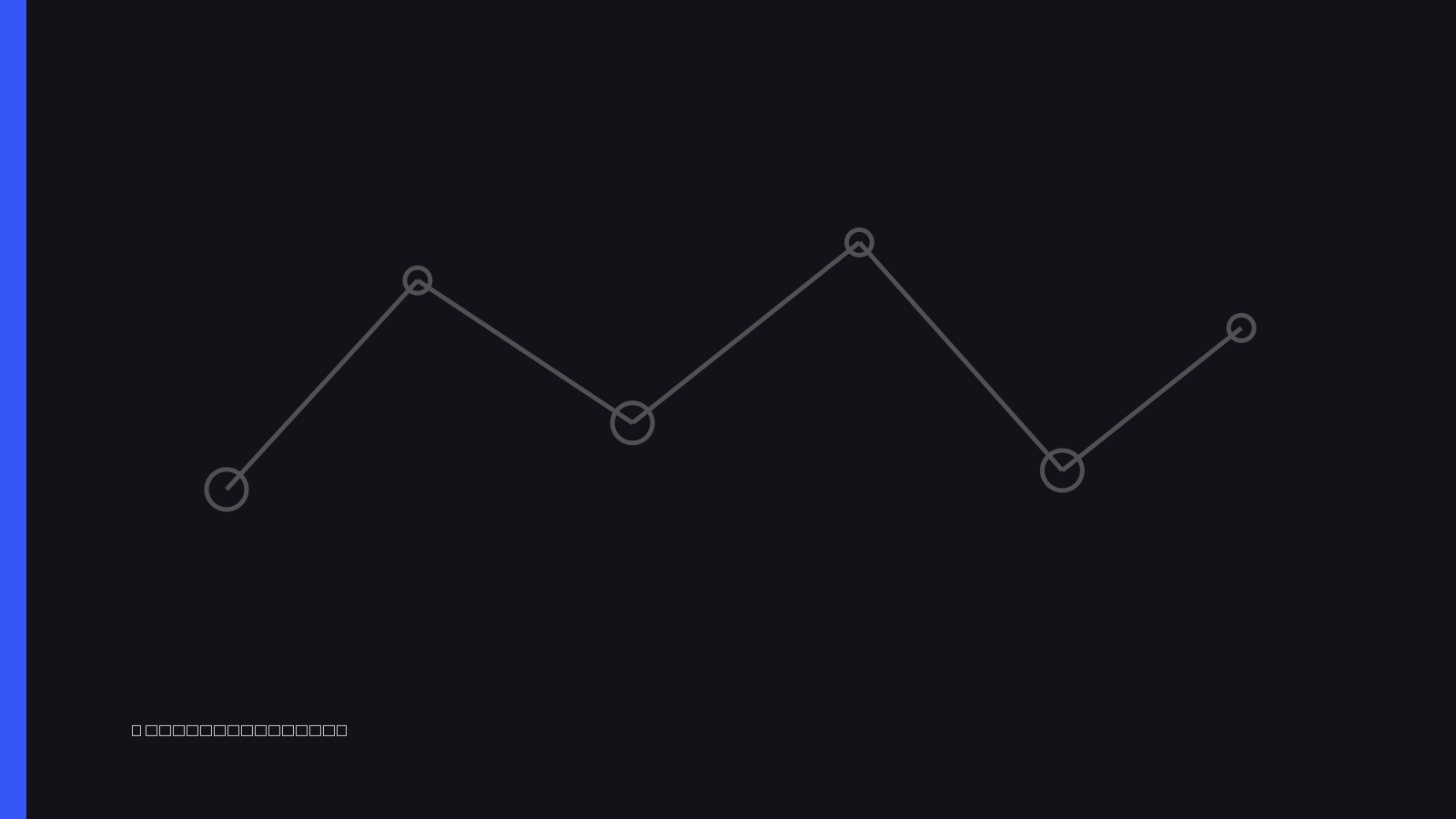
Google says developers have used Gemini 3.8 Flash for four experiments ranging from space-path visualization to an interactive transmission model. The examples illustrate the kinds of tasks Google is highlighting, but the supplied evidence does not independently verify their results, reproducibility or continued availability.
01
What we know now
- 01
[1] Google, “See what 4 builders are making with Gemini 3.8 Flash,” September 28, 2026: https://blog.google/innovation-and-ai/models-and-research/gemini-models/gemini-3-8-flash-developers
- 02
The supplied packet contains complete primary evidence from one first-party Google source.
02
Google described four community experiments
They cover orbital-path visualization, animated Seigaiha waves, a T. rex skeleton and an automatic-transmission prototype. Google is the only supplied source for these accounts.Model version in the announcement
Google presented Gemini 3.8 Flash as an update over Gemini 3.7 Flash, but supplied no independent benchmarks or technical methodology.Publication date of the Google post
The source was published on September 28, 2026. It does not establish present-day availability or terms.All capability, access and project descriptions come from Google’s first-party post.
03
Four demonstrations Google highlighted
Google’s September 28 post records four community experiments built with Gemini 3.8 Flash. They span visual, simulation and interactive engineering-oriented work, rather than constituting a common test suite.
These are Google’s descriptions of projects and outcomes. The supplied material does not independently confirm how the projects work, whether they remain online, or whether another person could reproduce them.
- Ashutosh Shrivastava is described as using Gemini 3.8 Flash and Google Antigravity to map live paths for satellites, space stations and orbital rockets.
- Noctus is described as using the model’s multimodal capabilities to turn a Seigaiha wave pattern into an animated ink-painting-style image.
- Emily is described as prompting the model through four phases to create a T. rex skeleton under specified requirements and checks.
- Hakm is described as building an interactive automatic-transmission prototype with 10 camera views, four display modes, labels and a selectable information panel.
04
What Google claims about the model
Google calls Gemini 3.8 Flash its latest and most intelligent workhorse model. It attributes the stated gains to greater diligence on complex tasks, including extra reasoning and repeated tool use intended to reach more accurate outputs.
Those descriptions should not be read as independently established measurements. No evaluation method, technical specification or external benchmark is supplied, and the post does not demonstrate that access is currently available under the same conditions in every referenced product.
- Google says the model performs extra reasoning steps and iterative tool calls on complex tasks.
- Google characterizes the release as improved for software engineering, agentic tasks and multistep reasoning compared with Gemini 3.7 Flash.
- Google says people can try it through Google AI Studio and other integrated tools, including Google Antigravity.
05
How to read the demonstrations
For readers considering Gemini 3.8 Flash, the post provides concrete examples of the work Google wants to showcase: visual generation, spatial or orbital visualization, structured prompting and interactive engineering-style interfaces. It does not provide the evidence needed to compare reliability, cost, latency or performance across models.
The safest conclusion is narrow: Google announced and described these demonstrations and said the model can be tried in named Google tools. Whether a particular reader can access the model, reproduce a project or achieve comparable results remains unconfirmed by the supplied source.
- The examples are useful as ideas for experimentation, not proof of general reliability.
- Product terms and availability can change after a post is published.
- For consequential use, test outputs and verify current documentation in the exact tool or integration being considered.
06
What readers can do
Treat the post as a set of first-party examples rather than a verified performance evaluation.
- 01
Review Google’s original post and any current product documentation before relying on model access or capabilities.
- 02
Test a small, representative task in the specific Google tool you plan to use; the post does not establish that all named tools offer identical access or model versions.
- 03
Check current pricing, limits, regional availability, account requirements and API documentation separately before adopting it in a workflow.
- 04
Do not assume the four demonstrations are still available, reproducible or independently validated.
07
Limits of this edition
Only Google’s first-party post was supplied; no independent benchmark, technical documentation or builder project page is included.
Google’s claimed improvements over Gemini 3.7 Flash, reasoning process and comparisons with higher-cost models remain company statements in this evidence set.
The record does not confirm current availability, geography, pricing, usage limits, account requirements, API access or parity among Google AI Studio and the other named tools.
The four projects’ public accessibility, underlying prompts, code and reproducibility are unknown.
SRC
Source desk
Direct links to the material behind this selection. Seeing the source matters as much as reading the synthesis.
Keep exploring
3 Sept 2026
Google announces Gemini 3.8 Flash, with stated token pricing and higher-effort trade-off
Google announced Gemini 3.8 Flash with stated developer, enterprise and consumer access routes, plus introductory token prices matching those Google states for Gemini 3.7 Flash. Google says complex, higher-effort tasks can increase token use. Its separate Flash Cyber model is restricted through Fairwind, with key access terms unspecified. [1]
15 Sept 2026
Google announces Gemini 3.8 Live and Extended Thinking with staged access
Google announced Gemini 3.8 Live and Gemini 3.8 Live Extended Thinking, describing live voice interaction, visual context and background task handling. The detailed access list places both models in the Gemini API and Google AI Studio, but enterprise access is private preview and some enterprise and Workspace releases are still described as coming soon. [1]
7 Sept 2026
Google announces agentic video understanding for Gemini API
Google says agentic video understanding is available through its Gemini API for three Flash models and can be enabled with an "agentic" processing setting. Google reports lower token use and costs and higher accuracy, and names LongVideoBench for one comparison, but does not provide the full benchmark methodology or conditions. It also says a Gemini app rollout will reach all users on Flash and Flash-Lite models soon, without a date or regional scope. [1]