Harness-Zero preprint proposes distilling agent-harness behavior into model weights
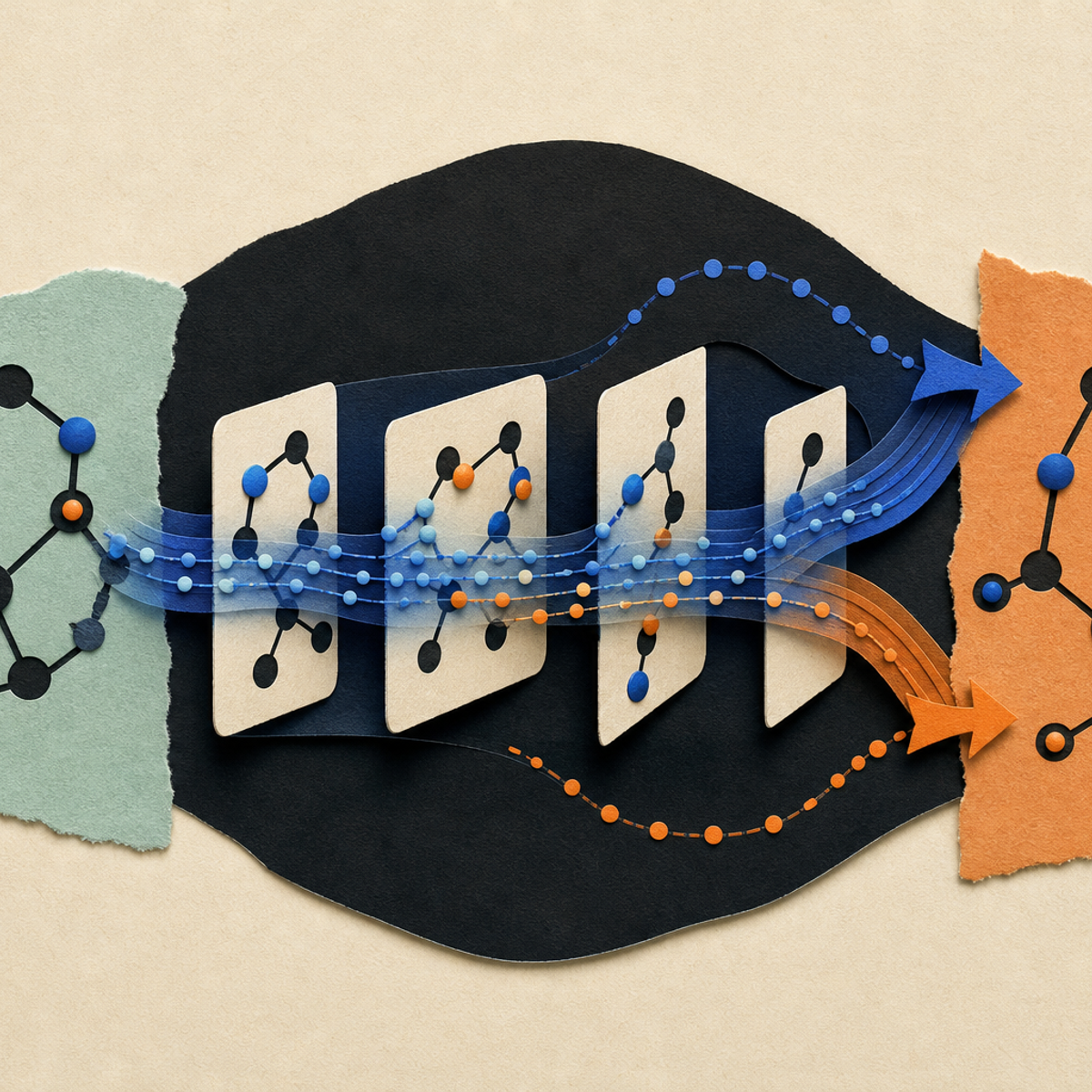
Harness-Zero is an arXiv preprint proposing agent-as-harness distillation: an optimized harness guides an intermediary that creates corrections in a fixed target harness's action space for fine-tuning. The authors report that the resulting model retained useful behavior after a specialized harness was removed, including a macro-average task-success change from 23.3% to 44.3%. The supplied evidence does not independently verify those results. [1]
This edition passed Imananq's enhanced publication checks. Some material claims remain explicitly attributed to official or company sources because no independent source is currently bound to this edition. The engine continues checking approved sources and will add corroboration only through a new edition that passes the full gate.

A version-1 arXiv preprint by Haoran Ye, Yuxing Lu, Haonan Dong, Zhaochen Su, and Guojie Song presents Harness-Zero, a proposed method for transferring behavior induced by a specialized AI-agent harness into model weights. The authors say this can allow a model to run with a fixed target harness after the specialized harness is removed. The supplied evidence is an arXiv record and abstract, not independent validation of the method or results. [1]
01
What we know now
- 01
[1] arXiv, “Harness-Zero: Harness Distillation via Agent-as-Harness,” version 1, submitted 21 September 2026. https://arxiv.org/abs/2609.24974v1
- 02
[1] The supplied complete primary evidence is the arXiv abstract record. It supports bibliographic details, the authors' method description, and their reported results, but not independent validation.
02
Reported macro-average task success without the specialized harness
The authors report an increase from the base model to Harness-Zero when the specialized harness was removed at deployment.Reported average recovery of evaluated behavior patterns
The authors report 82.3% average recovery across 28 harness-induced behavior patterns in three domains.arXiv record version and submission date
The arXiv record identifies this as version 1, submitted on 21 September 2026.All performance figures are reported by the paper's authors. The supplied evidence does not independently verify them. [1]
03
What problem the paper addresses
The paper frames specialized harnesses as a source of behavior that can remain tied to the harness at deployment. Harness-Zero is the authors' proposed way to distill selected harness-induced behavior into the model itself. This is a description of the authors' approach, not an independently verified finding. [1]
- The authors describe agent harnesses as external systems that mediate interaction between a model and its environment. [1]
- They study using a domain- or instance-optimized harness as training-time guidance, with the aim of retaining induced behavior under one fixed target harness. [1]
- According to the authors, direct use of optimized-harness guidance is difficult because the optimized and target harnesses differ in available information and action space. [1]
04
How Harness-Zero is described to work
The proposed mechanism is called agent-as-harness. Its intermediary is intended to turn guidance from the optimized harness into corrections compatible with the target setup, rather than treating that guidance as direct target-harness supervision. [1]
- An optimized harness guides a separate harnessing agent. [1]
- The harnessing agent corrects student-model responses before execution in the target harness's action space. [1]
- Those corrections become fine-tuning demonstrations. [1]
- The authors say fine-tuning on those trajectories internalizes harness-induced behavior, allowing removal of the specialized harness at deployment. [1]
05
What the authors report
These figures are the authors' experimental claims, not independently confirmed evidence of general performance. The supplied record does not provide the materials needed here to assess statistical uncertainty, robustness, or whether results transfer to other models and tasks. [1]
- Across knowledge-work, tool-use, and science experiments, the authors report macro-average task success of 23.3% for the base model and 44.3% after Harness-Zero when the specialized harness was removed at deployment. [1]
- They report 41.7% when that specialized harness remained attached. [1]
- They also report 82.3% average recovery across 28 harness-induced behavior patterns in the three domains. [1]
- For frontier language models using the same evolved harness, the authors say agent-as-harness outperformed code-as-harness. [1]
06
What remains unknown
The primary record documents what the authors propose and report, but it does not by itself verify reliable transfer of the technique beyond the evaluations summarized in the abstract. The primary source is the arXiv record linked below. [1]
07
What to check before relying on the result
Because the supplied evidence is a version-1 preprint abstract without full methodology or independent validation, readers should not treat it as establishing deployment readiness. [1]
- 01
Read the primary arXiv record and the linked paper before attempting to assess or use the method. [1]
- 02
Look for later materials that provide model details, benchmark definitions, per-domain outcomes, evaluation artifacts, or independent replication. [1]
- 03
Treat the reported performance changes as author-reported preprint results rather than independently established outcomes. [1]
08
Limits of this edition
The supplied evidence is the arXiv record and abstract, rather than a full account of the methodology or evaluation artifacts. [1]
The record does not identify the models, define benchmarks, provide statistical analysis, or give per-domain results. [1]
The reported outcomes are author claims in a preprint; the supplied evidence does not establish peer review, independent replication, or independent verification. [1]
The record reports 28 behavior patterns but does not identify or explain them individually. [1]
SRC
Source desk
Direct links to the material behind this selection. Seeing the source matters as much as reading the synthesis.
Keep exploring

9 Sept 2026
Preprint reports a model-harness mismatch in full-trajectory imitation
The authors report that full expert-trajectory imitation harmed weaker models when used with harnesses evolved around those models, while a method that corrects only a failing turn in the weaker model’s own rollout may preserve model-harness fit. The claims remain unreviewed and lack task-level and reproducibility detail in the supplied record. [1]

9 Sept 2026
RegionFed preprint proposes gradient-level personalization for federated retail-query models
RegionFed is an arXiv preprint whose authors propose using regional and global gradient conflict to guide federated-model personalization in heterogeneous retail-query settings. They report tests on three datasets and four architecture types, including a 92.27% RegionFed-Meta result and approximate epsilon 0.60 differential privacy. The supplied evidence does not establish peer review, independent validation, metric definitions, privacy accounting, reproducibility, implementation availability, or operational costs. [1]
31 Aug 2026
MAELLE preprint proposes electron-level paths for reaction prediction
MAELLE is an author-described reaction-prediction method based on discrete flow matching over graph-structured electron occupations. The preprint reports interpretable electron-rearrangement paths, competitive USPTO-480K performance, out-of-distribution robustness and side-product prediction. The available arXiv record does not provide the quantitative, methodological or independent evidence needed to verify those claims.