NASA Projects Longer Roman Telescope Fuel Outlook After First Burn
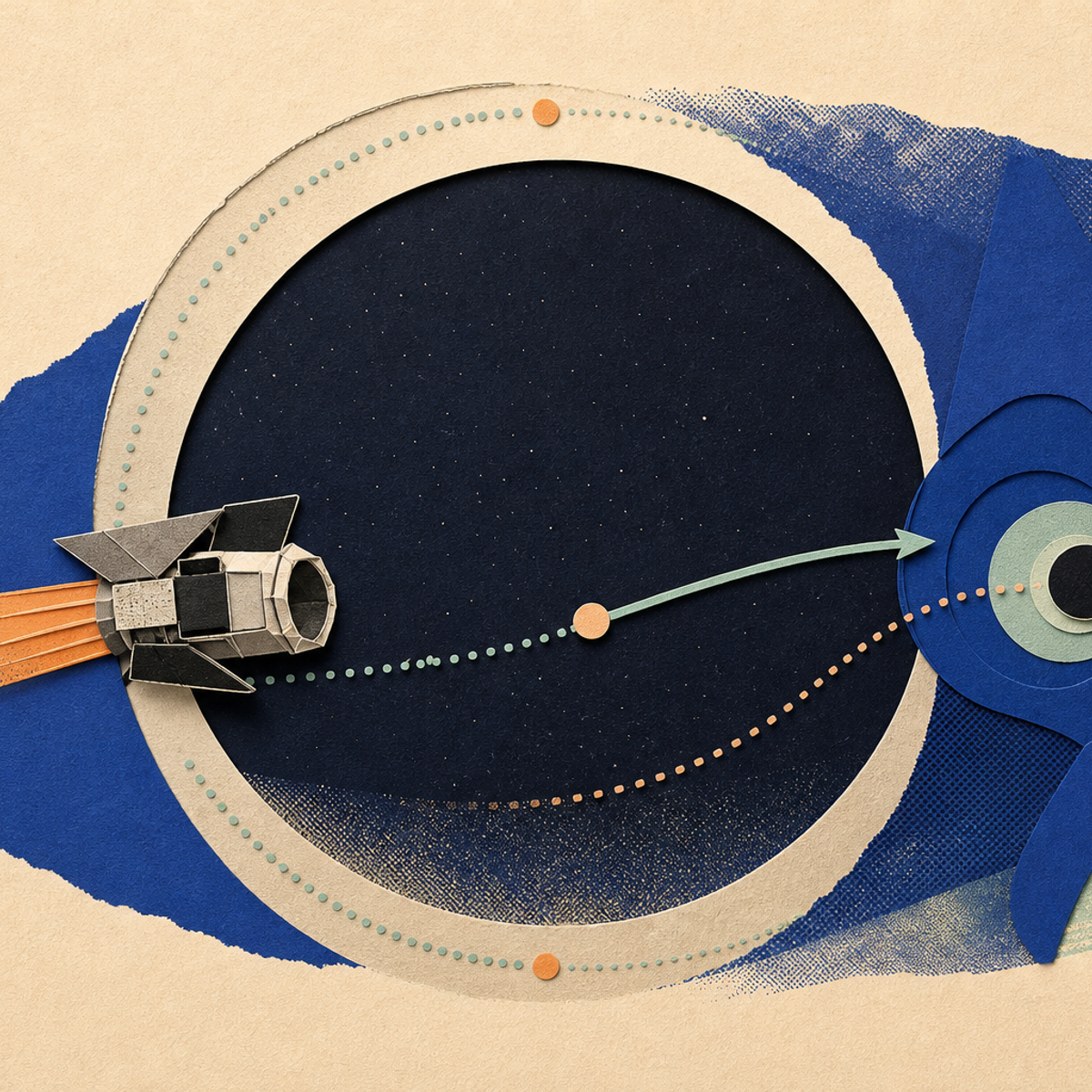
NASA says Roman’s first trajectory-correction burn used about 18 kilograms of propellant rather than the 200 kilograms allocated. Combined with additional propellant loaded before launch and anticipated savings in pending maneuvers, NASA projects at least 22 years of potential science operations. The projection is not a guarantee and had not yet been validated by the planned second correction or final L2 insertion.
This edition passed Imananq's enhanced publication checks. Some material claims remain explicitly attributed to official or company sources because no independent source is currently bound to this edition. The engine continues checking approved sources and will add corroboration only through a new edition that passes the full gate.

NASA says the Nancy Grace Roman Space Telescope’s first trajectory-correction burn used far less propellant than budgeted, contributing to its projection that the observatory has fuel for at least 22 years of potential science operations. That is a forecast rather than a guaranteed operational lifetime.
01
What we know now
- 01
[1] NASA Science, “Fuel Savings Double Potential Lifetime for NASA’s Roman Mission,” September 14, 2026. https://science.nasa.gov/blogs/roman/2026/09/14/fuel-savings-double-potential-lifetime-for-nasas-roman-mission/.
- 02
NASA’s reported first-burn performance is attributed to the agency and was not independently corroborated in the supplied packet.
02
Original fuel-budget design for primary and extended missions
NASA says Roman was designed around five years of primary operations and five years of extended operations.Propellant used in the first correction
NASA reports about 18 kilograms used, compared with a 200-kilogram allocation.NASA’s projected potential science-operations duration
NASA projects at least 22 years of potential operations based on reported and anticipated fuel savings.Expected timing of final L2 insertion
NASA expected insertion roughly 100 days after launch, around early December; the supplied evidence does not confirm it occurred.Reported maneuver results and NASA projections as of September 14, 2026.
03
What NASA reported
NASA recorded a substantial propellant saving during Roman’s first mid-course correction. The agency attributes the result to the maneuver’s accuracy and says the saved propellant can support additional observations because fuel is the observatory’s main consumable resource. [1]
- The first mid-course correction was executed on August 31 to refine Roman’s route toward its final orbit.
- NASA reports the maneuver achieved more than 99% accuracy and consumed about 40 pounds, or 18 kilograms, of propellant.
- The allocation for that burn was 441 pounds, or 200 kilograms, so NASA says the spacecraft used less than 10% of the planned amount.
04
Why the projected lifetime changed
The original design basis was a 10-year fuel budget, not a promise that the spacecraft would operate for exactly 10 years. NASA now projects at least 22 years of potential science operations, but the agency’s estimate depends partly on future events and therefore should not be treated as a confirmed service life. [1]
- Roman’s fuel budget was designed for a five-year primary mission and a five-year extended mission.
- NASA says extra propellant was loaded before launch because the spacecraft’s actual mass was below the conservative mass used in planning.
- NASA projects fuel for at least 22 years of potential science operations, combining the first-burn outcome, the additional loaded fuel, and expected savings in later maneuvers.
05
What was still pending
At the time of NASA’s post, the second correction and final L2 insertion remained planned activities. NASA expected both to consume less fuel than originally planned, but the supplied record provides no later confirmation of their completion or their actual propellant use. [1]
- NASA planned a second correction for later in September 2026.
- The agency expected final insertion into an orbit around the Sun-Earth L2 point about 100 days after launch, around early December.
- Once at L2, NASA says Roman would need station-keeping burns roughly every 28 days.
06
Why this matters
For readers following space-science missions, the key point is the difference between the reported result and the forecast: the first burn’s low propellant use is a recorded NASA result, while the at-least-22-year figure is NASA’s forward-looking fuel estimate. Future maneuvers, insertion results, station-keeping needs, and operational decisions will determine how the mission develops. The primary source is NASA’s September 14, 2026 Roman mission update. [1]
- The update offers a clear distinction between measured propellant use in one maneuver and a longer-term projection.
- The available record does not establish whether the projected fuel availability will translate into an equivalent number of years of scientific operations.
07
What to watch next
NASA’s 22-year figure is a fuel-based projection, not a confirmed mission lifetime.
- 01
Look for NASA confirmation of the second mid-course correction and the final insertion into the L2 orbit.
- 02
Treat the projected operating duration separately from the telescope’s original 10-year fuel budget and from any future operational decisions.
08
Limits of this edition
All performance figures and the lifetime outlook in this brief come from NASA’s own September 14, 2026 update; no independent corroboration was supplied.
NASA’s at-least-22-year estimate includes anticipated savings from a second correction and final orbit insertion that had not yet occurred when the update was published.
The supplied evidence does not establish Roman’s launch date or confirm the later planned maneuver and L2 insertion.
SRC
Source desk
Direct links to the material behind this selection. Seeing the source matters as much as reading the synthesis.
Keep exploring
2 Sept 2026
NASA reports Roman’s first course-correction burn on route to L2
NASA says Roman completed its first mid-course correction burn on August 31, 2026, as part of its transit toward L2. The agency projected insertion about 100 days after launch, but the supplied record does not confirm later maneuvers or arrival.
31 Aug 2026
NASA Reports Roman Telescope’s Final Planned Upper-Stage Burn Complete
NASA said the Falcon Heavy second stage completed its final planned burn for the Nancy Grace Roman Space Telescope. Roman was still attached during a five-minute coast, with separation scheduled next; the supplied update does not confirm separation or later mission milestones. [1]

6 Sept 2026
NASA catalog lists KMT-2025-BLG-0975L b as a Neptune-like exoplanet
NASA’s catalog lists KMT-2025-BLG-0975L b as a Neptune-like exoplanet detected through microlensing, with a recorded mass of 29.8 Earth masses and a 2.3-year orbit. The entry leaves key research details, including the discovery paper and measurement uncertainties, unspecified.