WikiSkill proposes a persistent knowledge layer for evolving AI-agent skills
WikiSkill is an arXiv preprint whose authors propose consolidating AI-agent execution experience into a persistent wiki that informs later skill updates. They report gains over comparison methods and no-skill baselines, stronger benefits for larger models, cases where smaller models with skills surpass larger unskilled models, and cross-model transfer in which other-model skills can outperform self-evolved ones. The supplied abstract lacks the evaluation detail and independent validation needed to confirm those claims.
This edition passed Imananq's enhanced publication checks. Some material claims remain explicitly attributed to official or company sources because no independent source is currently bound to this edition. The engine continues checking approved sources and will add corroboration only through a new edition that passes the full gate.

WikiSkill is an arXiv preprint proposing that lessons from AI-agent execution runs be consolidated in a persistent knowledge base, or wiki, and then used to revise reusable skills. Its authors report benchmark gains, model-scaling benefits and cross-model transfer, including cases in which skills evolved by another model outperform a model’s self-evolved skills. Those findings are preliminary author-reported results, not independently validated conclusions. [1]
01
What we know now
- 01
[1] arXiv, “WikiSkill: Compiling Agent Experience into Persistent Knowledge for Skill Evolution,” version 1, submitted 27 August 2026: https://arxiv.org/abs/2608.27454v1.
- 02
The supplied primary record provides the abstract but not the evaluation detail needed to independently assess performance, scaling, transfer or ablation claims. [1]
02
Publication status
arXiv records version 1 of the work. This establishes a preprint record, not peer review or independent validation.Version-1 submission
The arXiv record lists the first submission on 27 August 2026.Proposed intermediary
The authors describe a persistent wiki that accumulates experience for subsequent skill updates.Reported transfer
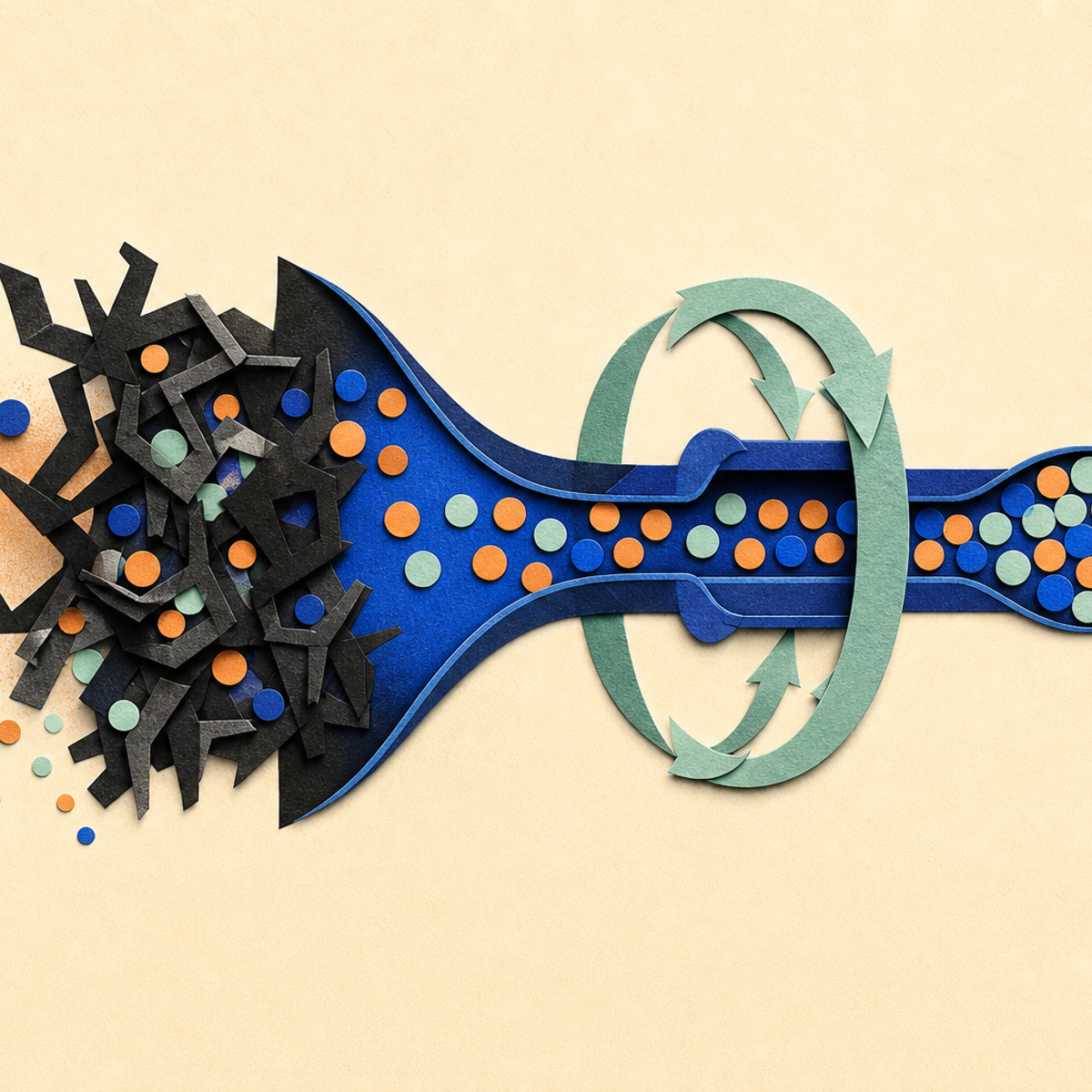
The authors say skills can transfer across models and model families, including cases where other-model skills outperform self-evolved ones.A high-level view of the proposed experience-to-knowledge-to-skill workflow and the status of its evidence.
03
What the preprint proposes
arXiv records “WikiSkill: Compiling Agent Experience into Persistent Knowledge for Skill Evolution” by Liyan Tang, Cyrus Rashtchian, Chun-Sung Ferng, Andrew Tomkins, Da-Cheng Juan and Tu Vu. Version 1 was submitted on 27 August 2026. [1]
The authors describe WikiSkill as a framework for co-evolving agent skills and a persistent knowledge base. In their account, the wiki is intended to preserve insights that might otherwise remain scattered through prior optimization histories, so later skill updates can reuse accumulated knowledge. The supplied record supports this high-level design description but does not establish implementation details. [1]
- The framework distinguishes raw execution experience, accumulated knowledge and executable skills.
- It continuously consolidates execution experience into a persistent wiki.
- Later skill updates can build on the accumulated wiki knowledge.
04
Reported performance and scaling findings
The authors report that WikiSkill consistently outperformed state-of-the-art skill-evolution methods across diverse benchmarks and models, and improved on no-skill baselines in most tested model-benchmark combinations. They also report that skill evolution complements model scaling: larger models generally benefited more from evolved skills, while smaller models equipped with skills could outperform substantially larger models without them. These are the authors’ findings, not independently verified results. [1]
The abstract does not specify which benchmarks, models or baselines were used, nor does it give effect sizes, metrics or statistical analyses. As a result, the supplied evidence does not allow readers to assess the magnitude, reliability or practical scope of the reported scaling and performance effects. [1]
- The authors report results above state-of-the-art skill-evolution methods across diverse benchmarks and models.
- They report improvement over no-skill baselines in most model-benchmark settings.
- They say larger models generally gained more from evolved skills, while smaller models with skills could outperform substantially larger models without them.
05
What it claims about transferable skills
For the question of reuse across systems, the consequential claim is that evolved skills transfer effectively across models and model families. The authors further say that skills evolved by other models can outperform skills a model evolves for itself. If supported by detailed evaluation, that would suggest the persistent knowledge layer may help preserve skills that remain useful beyond the model that first developed them. This remains an author-reported claim. [1]
The authors also report that their ablation studies found persistent knowledge accumulation in the wiki to be critical for effective skill evolution. The supplied abstract does not state the transfer conditions, the models involved, the size of any advantage, or the ablation setup. It therefore does not establish when cross-model reuse works or why it succeeds. [1]
- The authors report transfer across models and model families.
- They report that skills evolved by other models can outperform self-evolved skills.
- They report an ablation result identifying persistent wiki accumulation as critical.
06
Why the design is worth examining
The preprint addresses the authors’ stated problem that insights guiding skill development can be dispersed across optimization histories and difficult to reuse systematically. Its proposed solution is a durable knowledge layer that accumulates and refines those insights before later skill updates draw on them. [1]
Important unanswered questions include how the wiki is kept accurate as it grows, what resources it requires, how it behaves when prior experience is misleading, and whether its reported gains and transfer effects can be reproduced independently. The supplied record does not answer these questions. [1]
- The proposal aims to make lessons from earlier agent runs available to later iterations.
- The persistent wiki is the proposed bridge between execution histories and updated skills.
- Key operational trade-offs are not disclosed in the supplied evidence.
07
08
How to assess the preprint
Treat WikiSkill as an early research proposal. Its reported results are from the authors and require fuller methodological review and independent replication.
- 01
Read the primary arXiv record: https://arxiv.org/abs/2608.27454v1
- 02
Separate the proposed persistent-wiki design from the authors’ performance, scaling and transfer findings.
- 03
Before adopting the approach, look for disclosed methods, evaluation data, code, resource costs and independent reproduction.
09
Limits of this edition
The supplied record establishes an arXiv preprint, not peer review, independent validation or replication. [1]
The available abstract does not identify the benchmarks, models, comparison methods, metrics, numerical results or statistical analyses behind the reported findings. [1]
The supplied evidence does not establish whether code, evaluation data, trained skills or a reproducibility package are publicly available. [1]
Computational cost, latency, storage requirements and failure modes of maintaining the persistent wiki are not stated in the supplied record. [1]
SRC
Source desk
Direct links to the material behind this selection. Seeing the source matters as much as reading the synthesis.
Keep exploring

19 Aug 2026
Which Intrinsic Tokenizer Measures May Signal Language-Model Performance?
The TokEval preprint reports that intrinsic tokenizer evaluation can extend beyond fertility and compression rate. In its controlled pretraining experiments, information-theoretic metrics were associated with language-modeling ability, while structure-sensitive measures involving digits and line breaks were associated with task accuracy. The results are promising but remain preprint-level evidence and do not include Armenian-specific testing.
29 Aug 2026
Preprint proposes sampling-based estimates for transduced language models
An arXiv preprint proposes without-replacement sampling and inverse-probability reweighting as an alternative to threshold-only pruning for estimating probabilities in transduced language models. Its authors report improved compute-variance or error results in text and DNA tests, plus major runtime savings in one DNA-to-amino-acid case, but the supplied evidence does not establish peer review or replication.
19 Aug 2026
Horizon Europe for Armenian teams: where to begin
A five-step path from Armenia's associated-country status to a specific topic, consortium role, evidence plan, and submission calendar.