NASA records open release of a lunar-science AI model, with key details still unconfirmed
NASA records an open lunar-science AI release with code, datasets and benchmarks. Its stated results favour the model on polar-ice stability estimation and show comparable outcomes on two other tasks, but the announcement lacks numerical evaluations and identifies lighting variation as a limit for detecting smaller craters.
NASA says it launched the NASA-IBM Lunar Foundation Model on 10 September 2026 with IBM Research and academic collaborators. The agency describes an open release intended for lunar-science research, while key practical details, including exact resource links, licences and quantitative test results, are absent from the supplied announcement. [1]
01
What we know now
02
Release format recorded by NASA
NASA says the model, codebase, machine-learning-ready pre-training datasets and benchmark collections were released for research use.Primary training scale
NASA reports training on roughly 2 million image tiles, primarily from Lunar Reconnaissance Orbiter data.Reported operating caution
NASA says varying lighting between lunar orbits may influence the visibility of smaller craters in change-detection work.Summary of what NASA records and the main disclosed limitation; performance claims remain attributed to NASA. [1]
03
What NASA says it released
NASA records that it launched the NASA-IBM Lunar Foundation Model in an ongoing collaboration with IBM Research and academic institutions. It describes the project as an open-source AI model designed specifically for lunar science. [1]
NASA says the pre-trained model can be adapted with small amounts of labelled data for tasks including crater mapping, identifying irregular mare patches and estimating likely stability of ice near the lunar poles. These are stated research uses, not independently verified capabilities in the supplied evidence. [1]
- NASA says the model was trained primarily on Lunar Reconnaissance Orbiter data, with roughly 2 million image tiles. The agency also records additional high-resolution imagery and terrain data from GRAIL, Lunar Prospector and JAXA’s Selenological and Engineering Explorer. [1]
- According to NASA, the release includes the model, its complete codebase, machine-learning-ready pre-training datasets and benchmark collections. NASA says the model is publicly hosted on Hugging Face, the code is on GitHub, and the model is integrated into TerraTorch. [1]
- The supplied page does not contain the exact URLs needed to retrieve those individual resources. [1]
04
Performance statements remain NASA’s claims
The announcement presents favourable comparative results, but it does not establish how large any difference was, which baselines were used, or how results may transfer to other imagery, labels or research workflows. Readers should treat the performance description as NASA’s reported evaluation rather than as an independently established finding. [1]
- NASA says the model matched or exceeded several baseline models across the tasks it evaluated. [1]
- NASA reports comparable results for crater mapping and irregular-mare-patch segmentation, and a clear advantage for estimating polar-ice stability. [1]
- These comparisons cannot be assessed quantitatively from the supplied page because it does not include benchmark tables, metrics, protocols or independent validation. [1]
05
A disclosed limit for change detection
Lighting is the specific operational limitation NASA identifies. It matters because a workflow that compares images from separate observations may not see small craters consistently when illumination differs. The announcement does not say how users should correct for this issue, so independent validation against the relevant imagery and conditions remains necessary. [1]
- NASA describes a demonstration in which a post-impact image excluded from pre-training was used in a fine-tuning test for recognising a new surface change. [1]
- The agency cautions that lighting conditions varying between orbits may affect smaller-crater visibility in this type of work. [1]
- NASA does not quantify the size of that effect or provide other task-specific failure modes in the supplied evidence. [1]
06
What remains to be checked
For a reproducible deployment or study, interested users still need to locate the precise release artefacts and confirm their terms and technical documentation. Nothing in the supplied evidence establishes a licence, a supported computing configuration, or a complete installation path. [1]
07
Before using the release
NASA’s page identifies the release channels but does not supply direct repository or dataset links, licensing terms, or setup requirements. Verify these details at the primary announcement and linked official project pages before relying on the materials. [1]
- 01
Start with NASA’s primary announcement, then locate the referenced Hugging Face, GitHub, and TerraTorch resources. [1]
- 02
Check the applicable licence, dependencies, hardware needs, and fine-tuning guidance, none of which are specified in the supplied announcement. [1]
- 03
Validate results for the intended task. NASA reports comparative performance but provides no numerical benchmark table, error rates, or evaluation protocol on the page. [1]
- 04
For surface-change work, account for orbital lighting differences, which NASA says can affect visibility of smaller craters. [1]
08
Limits of this edition
The supplied evidence is a first-party NASA announcement; it does not independently corroborate the launch, collaboration, release contents or performance statements. [1]
The announcement names Hugging Face, GitHub and TerraTorch but does not provide exact model, code, dataset, benchmark or companion-paper links in the acquired evidence. [1]
NASA’s page does not state licences, usage restrictions, hardware requirements, software dependencies or fine-tuning instructions. [1]
NASA reports relative benchmark outcomes but supplies no numerical results, error rates, task-by-task failure analysis, evaluation protocol or independent validation. [1]
SRC
Source desk
Direct links to the material behind this selection. Seeing the source matters as much as reading the synthesis.
Keep exploring
2 Sept 2026
NASA lists free Astrobiology Math problem set for grades 6-12+
NASA lists a free English problem set and guide for grades 6-12+ that applies mathematics to astrobiology topics. The official page describes 75 problems and several suggested instructional uses, but does not establish the resource’s original publication date, revision history or classroom impact. [1]
6 Sept 2026
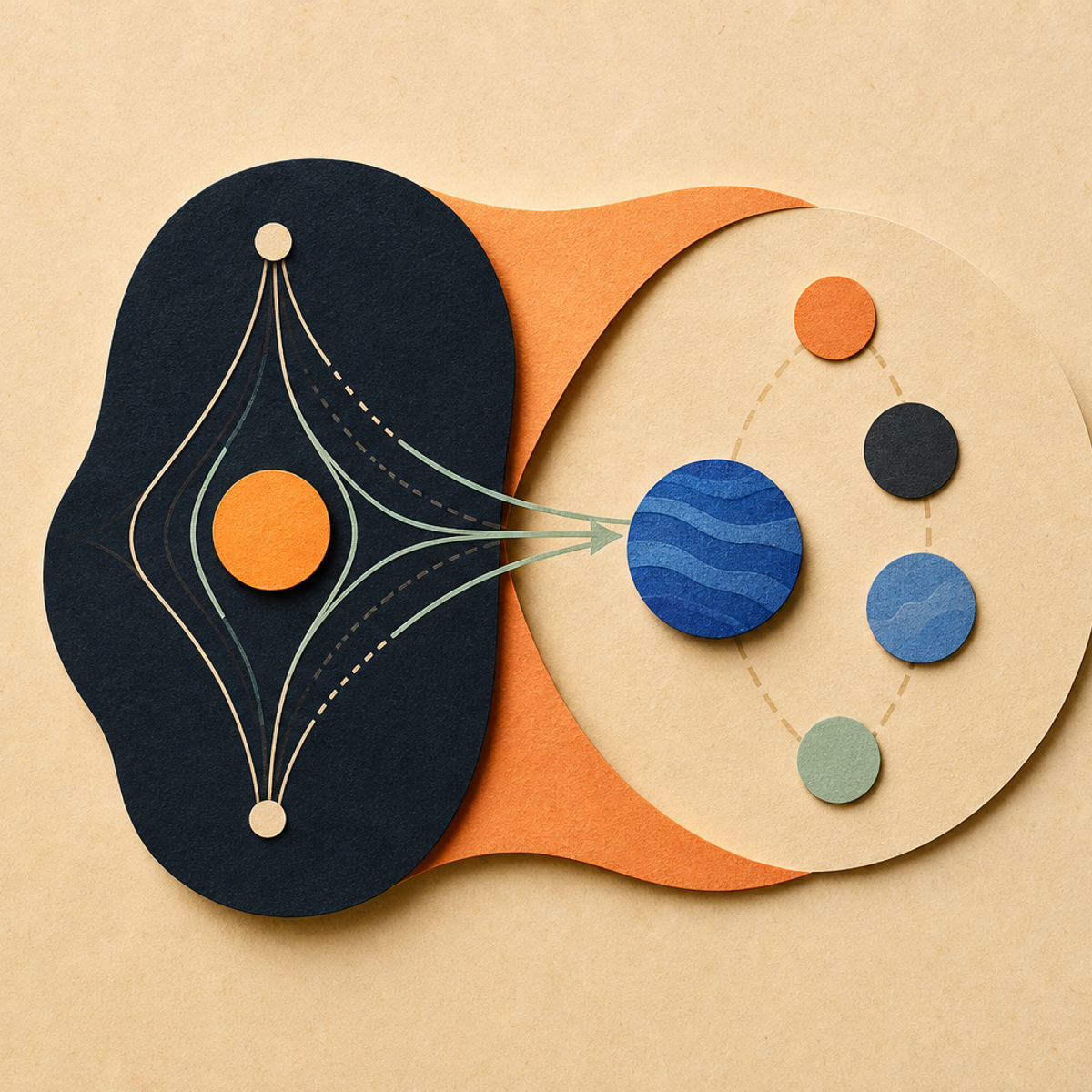
NASA lists KMT-2025-BLG-1160L b as a Neptune-like microlensing planet
NASA’s catalog lists KMT-2025-BLG-1160L b as a Neptune-like microlensing discovery announced in 2026. It records a 25.36-Earth-mass planet at 2.56 AU with a 5.4-year orbit, while marking its 0.484-Jupiter-radius value as an estimate. [1]
2 Sept 2026
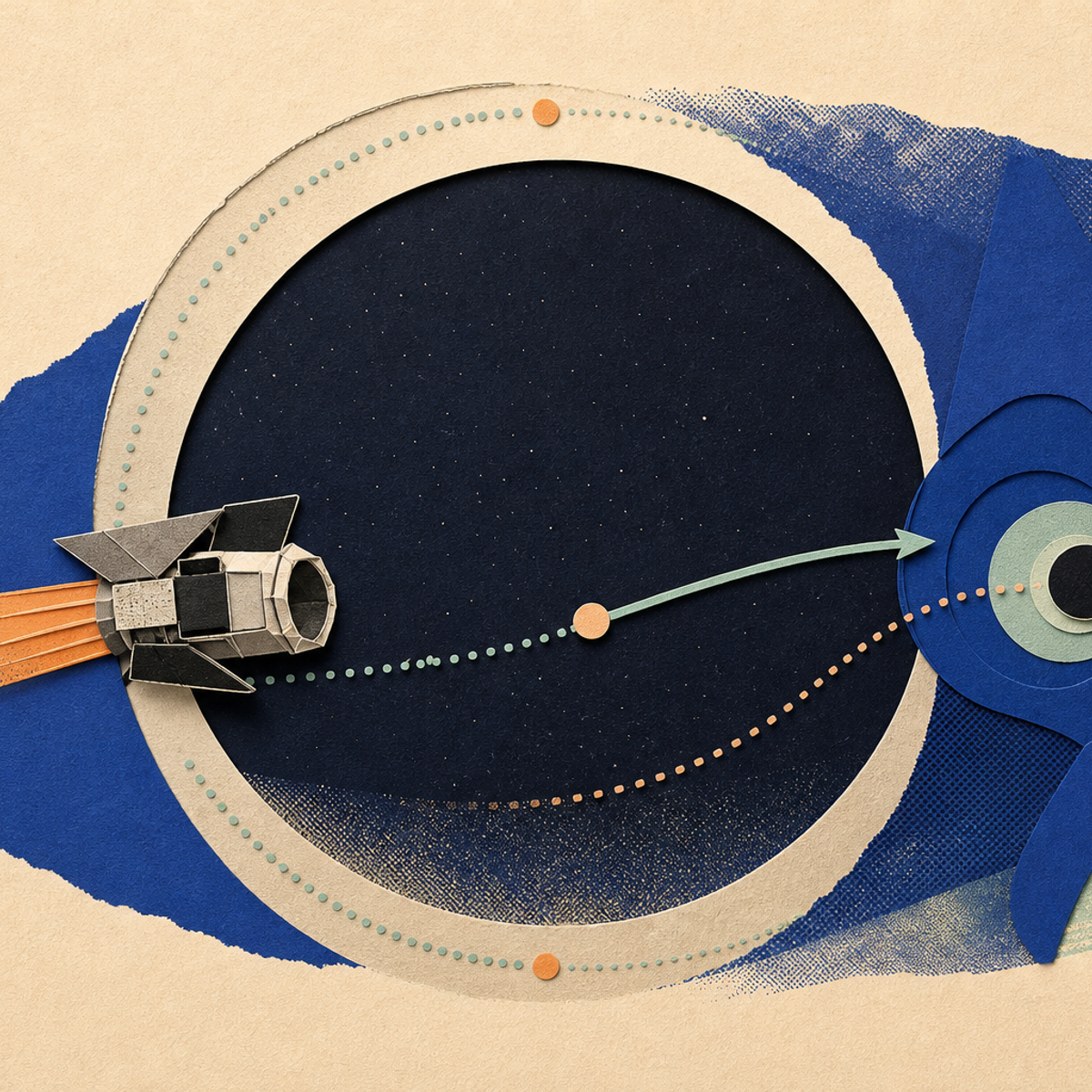
NASA reports Roman’s first course-correction burn on route to L2
NASA says Roman completed its first mid-course correction burn on August 31, 2026, as part of its transit toward L2. The agency projected insertion about 100 days after launch, but the supplied record does not confirm later maneuvers or arrival.