NASA Reports an Evolving 10-Sided Wave at Saturn’s South Pole
NASA says Hubble data reveal an evolving 10-sided wave in a jet stream around Saturn’s south pole, extending through multiple atmospheric layers. The agency reports that prior Hubble searches and Cassini observations did not show a long-lived southern counterpart, but the wave’s cause, lifespan and stability remain unresolved.
This edition passed Imananq's enhanced publication checks. Some material claims remain explicitly attributed to official or company sources because no independent source is currently bound to this edition. The engine continues checking approved sources and will add corroboration only through a new edition that passes the full gate.
NASA reports that Hubble Space Telescope observations have revealed a giant, evolving 10-sided atmospheric wave around Saturn’s south pole. The agency says the feature sits in a powerful jet stream and spans multiple atmospheric layers, while its origin, longevity and eventual behaviour remain unknown. [1]
01
What we know now
- 01
[1] NASA Hubble Mission Team, “NASA’s Hubble Tracks New Decagon Encircling Saturn’s South Pole,” NASA Science, published 2 September 2026. https://science.nasa.gov/missions/hubble/nasas-hubble-tracks-new-decagon-encircling-saturns-south-pole/
- 02
[1] NASA’s article says the results were published in Science Advances, but the supplied evidence does not provide the paper title, DOI or direct journal URL.
02
Reported shape around Saturn’s south pole
NASA describes a regular-sided atmospheric wave with 10 sides.Earliest Hubble record cited
NASA says archived Hubble observations confirmed the feature’s presence by this year.Earlier search record
Researchers told NASA they had searched Hubble images for a southern counterpart since 1990; Cassini images from 2004 to 2017 showed no sign of a long-lived feature.Atmospheric extent
NASA says multi-wavelength observations indicate the pattern extends through multiple atmospheric layers.Dates, observations and interpretations are reported by NASA. The formation mechanism and future of the feature remain undetermined.
03
What NASA reports
NASA published its account on 2 September 2026, saying recent Hubble images revealed a 10-sided wave encircling Saturn’s south pole. The agency and study team describe the pattern as evolving, rather than confirming that it is already a permanent atmospheric structure. [1]
According to NASA, the wave is within one of Saturn’s powerful jet streams. Images taken at different wavelengths probe different altitudes, and NASA says their results indicate a vertically extended structure, not merely a pattern at the cloud level. [1]
04
Why the feature appears recent
NASA says Saturn’s changing seasons gradually brought its south pole back into view from Earth. Ground-based imagery prompted closer examination, and researchers then assembled several years of Hubble observations to trace subtle early signs before the pattern became more clearly defined. [1]
The reported record also includes earlier non-detections. A study author told NASA that researchers had searched Hubble images for a southern counterpart to the northern hexagon since 1990, while NASA’s Cassini spacecraft observations from 2004 to 2017 showed no sign of a long-lived formation. Alongside the Hubble detection back to 2023, this context supports the team’s attributed view that the decagon formed relatively recently. [1]
05
Open questions
NASA and the researchers have not established what drives the structure, how long it may last or how it will compare over time with the northern hexagon, which NASA says has been observed for more than four decades. [1]
The report is a bounded update on long-term planetary observation: repeated images can reveal an atmospheric pattern’s development, but they do not yet resolve its physics or future. Readers can consult NASA’s Hubble article, the primary source for this brief, at the link below. [1]
06
What to follow
NASA says the team will continue observations and use computer models to examine the feature’s origin and evolution.
- 01
Watch for follow-up Hubble and James Webb Space Telescope observations.
- 02
Treat explanations of the wave’s cause, lifetime and possible stability as unresolved until further research is reported.
07
Limits of this edition
This brief relies on NASA’s mission-team article. The supplied material does not include the title, DOI or direct link for the Science Advances paper referenced by NASA. [1]
NASA’s description of the feature’s novelty, recent formation and comparison with Saturn’s northern hexagon is attributed to the agency and the study team. [1]
No Armenia-specific effect is documented in the supplied source. [1]
SRC
Source desk
Direct links to the material behind this selection. Seeing the source matters as much as reading the synthesis.
Keep exploring

2 Sept 2026
NASA lists free Astrobiology Math problem set for grades 6-12+
NASA lists a free English problem set and guide for grades 6-12+ that applies mathematics to astrobiology topics. The official page describes 75 problems and several suggested instructional uses, but does not establish the resource’s original publication date, revision history or classroom impact. [1]
2 Sept 2026
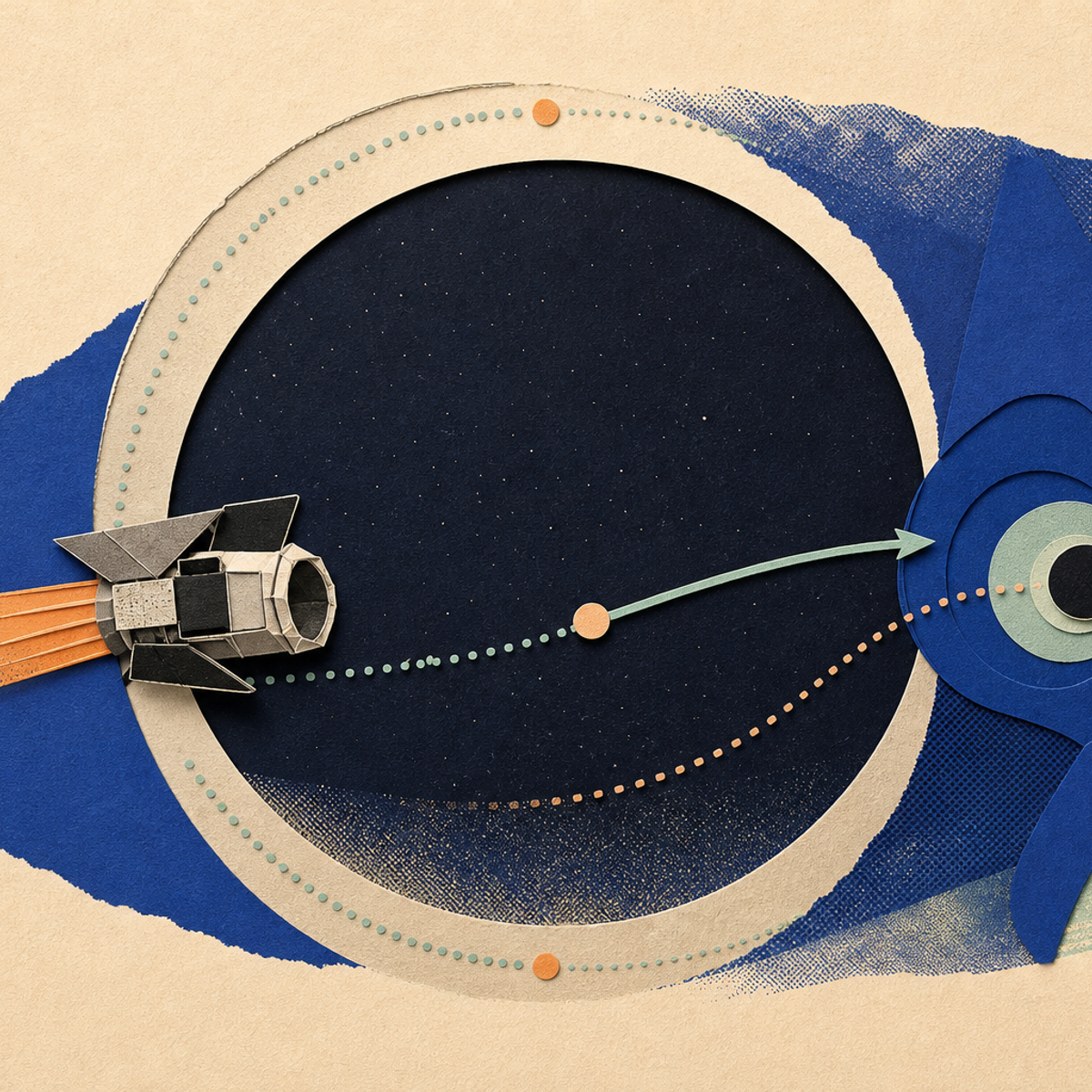
NASA reports Roman’s first course-correction burn on route to L2
NASA says Roman completed its first mid-course correction burn on August 31, 2026, as part of its transit toward L2. The agency projected insertion about 100 days after launch, but the supplied record does not confirm later maneuvers or arrival.
3 Sept 2026
NASA announces A.17 Hydrosphere research opportunity with 2026-27 proposal dates
NASA announces A.17 Hydrosphere as a new ROSES-2025 opportunity covering research on Earth’s water across ocean physics, terrestrial hydrology and precipitation science. NASA publishes 8 October 2026 for Step 1 and 28 January 2027 for Step 2, while key application requirements remain outside the supplied announcement. [1]