NASA says Swift orbit-boost attempt ended without a boost
NASA says LINK did not raise the Neil Gehrels Swift Observatory’s orbit after the servicing spacecraft developed intermittent communications and orientation-control problems. NASA and Katalyst scaled the mission back from a grapple-and-boost attempt to technology demonstrations. NASA had forecast that Swift would re-enter the atmosphere by the end of 2026 without intervention; its controllers also suspended pointed science observations for several months while using lower-drag pointing to keep the observatory above a critical altitude. NASA says the work generated operational experience, but detailed technical results and independent confirmation were not supplied. [1]
This edition passed Imananq's enhanced publication checks. Some material claims remain explicitly attributed to official or company sources because no independent source is currently bound to this edition. The engine continues checking approved sources and will add corroboration only through a new edition that passes the full gate.
NASA says its attempt with Katalyst Space to raise the Neil Gehrels Swift Observatory’s orbit ended without a boost. The agency reports that communications losses and orientation-control issues aboard Katalyst’s LINK spacecraft led the teams to abandon the planned grapple-and-boost operation. NASA had said that, without intervention, Swift was expected to re-enter Earth’s atmosphere by the end of 2026 as its mission approached its close. [1]
01
02
Orbit-boost objective
NASA reports that LINK did not grapple with or raise Swift’s orbit.NASA involvement ended
NASA records that it formally concluded its involvement in LINK’s mission on this date.LINK re-entry
NASA records that LINK re-entered Earth’s atmosphere on this date.The status and dates come from NASA’s September 28, 2026 mission article. [1]
03
Why the boost plan changed
NASA reports that the orbit raise was not completed. The supplied account says LINK’s revised task was to attempt demonstrations rather than capture Swift, but it does not specify which demonstrations succeeded or provide measured results. [1]
- NASA contracted Katalyst Space in September 2025 for a compressed mission to design, build, test, launch, rendezvous with, grapple, and lift Swift. [1]
- After reaching space and completing initial checkouts, LINK experienced intermittent communications losses and orientation-control issues, according to NASA. [1]
- NASA says the partners then agreed to stop pursuing the grapple-and-boost objective and instead attempt technology demonstrations involving LINK’s xenon-powered propulsion and three robotic arms. [1]
04
What the result meant for Swift
NASA presented the boost effort as a time-critical attempt to extend Swift’s time in low Earth orbit. Because the planned orbit raise did not occur, NASA’s forecast of re-entry by year’s end remained important context, although the supplied material provides no later outcome for Swift itself. [1]
- NASA says Swift was predicted to descend to roughly 300 kilometres, described as a point of no return for the boost attempt, in fall 2026. [1]
- The agency also said that, without intervention, Swift was expected to re-enter the atmosphere by the end of 2026. [1]
- NASA formally ended its involvement in LINK’s mission on September 3, 2026, and records that LINK re-entered the atmosphere on September 25, 2026. [1]
05
How controllers bought time
NASA says the operations team had to reduce atmospheric drag while avoiding pointing directions near Earth, the Moon, or the Sun that could overheat or damage instruments. It also reports that a streamlined orientation could expose the telescopes to atmospheric particles. NASA says the resulting balance bought time for the boost effort, but did not produce an orbit raise. [1]
- NASA says controllers began replacing about 25% of Swift’s normal science targets with lower-drag pointing directions in December 2025. [1]
- By February 2026, the controllers had moved entirely to the drag-reduction approach. [1]
- NASA reports that Swift was not executing pointed science observations from mid-February through late August. [1]
- NASA says the approach kept the observatory above the critical altitude threshold for several months. [1]
06
What NASA says the teams learned
NASA records the effort as a source of experience for future servicing programmes, despite the failed boost. This is an agency assessment: the supplied evidence does not independently establish the performance of the demonstrations or their eventual effect on later missions. [1]
- NASA says the work provided operational experience in a rapid, high-risk servicing effort. [1]
- The agency identifies experience with LINK’s propulsion system and robotic arms as relevant to possible future in-space servicing. [1]
- NASA also describes the mission as a test of faster project management and satellite operations intended to extend time in low Earth orbit. [1]
07
Primary source
NASA’s full mission account is the primary source for the chronology, reported anomalies, and stated lessons.
- 01
NASA Science, “NASA Highlights Lessons Learned From Swift Boost Mission”: https://science.nasa.gov/missions/swift/nasa-highlights-lessons-learned-from-swift-boost-mission [1]
- 02
The available evidence is NASA’s account. Its statements on the spacecraft’s problems, demonstrations, and lessons have not been independently verified in the supplied material. [1]
08
Limits of this edition
This brief is based on one primary NASA article; no independent reporting or technical post-mission report was supplied. [1]
NASA does not provide detailed telemetry, a full anomaly investigation, or quantified results for LINK’s technology demonstrations. [1]
NASA describes the experience as useful for future spacecraft-servicing work. That prospective value is the agency’s assessment, not independently established impact. [1]
The supplied evidence establishes no concrete Armenia-specific effect or participation path. [1]
SRC
Source desk
Direct links to the material behind this selection. Seeing the source matters as much as reading the synthesis.
Keep exploring
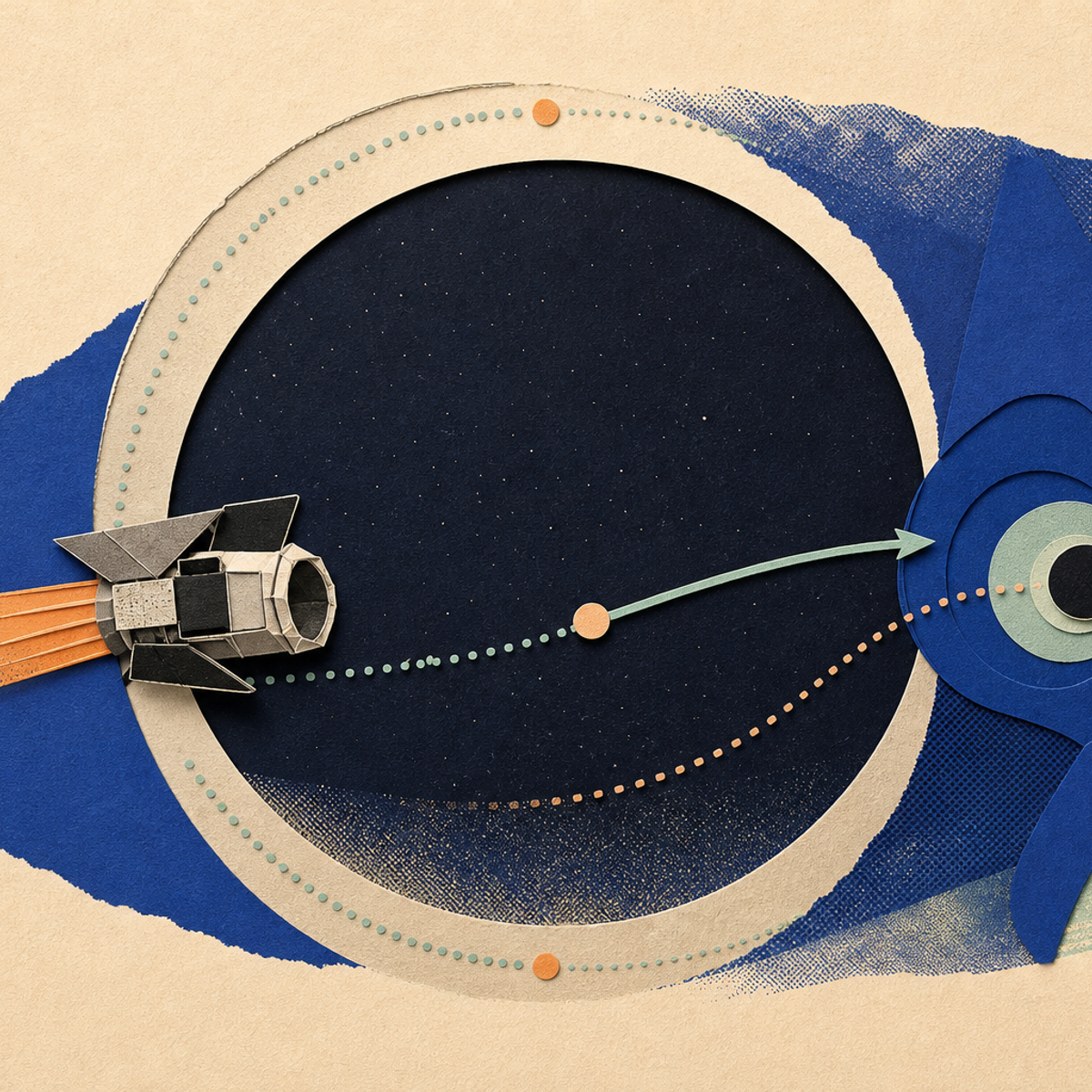
2 Sept 2026
NASA reports Roman’s first course-correction burn on route to L2
NASA says Roman completed its first mid-course correction burn on August 31, 2026, as part of its transit toward L2. The agency projected insertion about 100 days after launch, but the supplied record does not confirm later maneuvers or arrival.
4 Sept 2026
NASA reports Dragonfly wiring milestone and IAU-approved Titan landing-field name
NASA reports that Dragonfly’s electrical harness was installed on its flight fuselage in July 2026. It also says the IAU approved Ahmakiq Undae as the name of the planned Titan landing dune field. The agency's current schedule calls for launch in summer 2028 and arrival in late 2034, subject to change.

2 Sept 2026
NASA lists free Astrobiology Math problem set for grades 6-12+
NASA lists a free English problem set and guide for grades 6-12+ that applies mathematics to astrobiology topics. The official page describes 75 problems and several suggested instructional uses, but does not establish the resource’s original publication date, revision history or classroom impact. [1]