Curiosity documents unusual shallow pits near Mount Sharp
NASA’s Curiosity team says it found unusually broad, shallow pits in two Mount Sharp bedrock workspaces and documented them with stereo imaging. It is also examining nearby layered and gray rocks, but the source provides no confirmed explanation or final analysis. [1]
This edition passed Imananq's enhanced publication checks. Some material claims remain explicitly attributed to official or company sources because no independent source is currently bound to this edition. The engine continues checking approved sources and will add corroboration only through a new edition that passes the full gate.
NASA’s Curiosity team reported broad, shallow pits scattered across bedrock in two recent workspaces near Mount Sharp. The team says the features differ from pits the rover has encountered before and is collecting images and other observations, but their formation remains unresolved. [1]
01
02
Pits observed in two bedrock workspaces
NASA describes them as broader and shallower than pit features previously encountered by Curiosity.Example pit diameter
NASA’s image caption gives an example diameter of about 1 centimetre.Planning time lost
The team recorded the loss of one planning day because of a lost downlink.Mission-team observations from the Curiosity update; the pits' origin has not been determined.
03
An unexpected bedrock feature
In its update covering sols 4988 to 4994, NASA’s Curiosity team recorded broad, shallow pits across two bedrock workspaces near Mount Sharp. The team called them a new puzzle because they did not resemble the mission’s earlier pit observations. [1]
The source does not determine what made the pits. Its comparison with more familiar weathering-related voids is context from the team, not a confirmed explanation for these newly reported features. [1]
- The pits were broader and shallower than previously encountered features, according to the mission team.
- NASA says common pits can result when resistant nodules or pebbles weather out of rock, but no obvious former objects were seen in these pits.
- An image caption identifies one example pit as about 1 centimetre across.
04
How the rover is examining the site
NASA says Curiosity used its MAHLI camera and Mastcam to document the pits in stereo and acquire closely overlapping images for potential digital elevation models. The update does not provide those models or their results. [1]
The rover also examined layered bedrock, gray resistant material, loose rocks and nearby buttes. Mastcam imaged and ChemCam scanned layered rock packages, while observations of the buttes included broader imaging and targeted views of selected horizons. [1]
- MAHLI and Mastcam collected stereo mosaics and overlapping image sets of the pits.
- NASA says the overlapping images can be used to create digital elevation models.
- ChemCam, MAHLI and APXS also examined gray, rough, resistant layers; ChemCam studied a loose gray rock.
05
Early interpretations, not conclusions
The Curiosity team says variations in the texture and structure of nearby layers may preserve changes in depositional conditions. It also says gray, rough, resistant layers that differ from the host bedrock may point to different chemistry. [1]
Neither interpretation is presented as final. The update supplies no final compositional or mineralogical analysis, so the broader significance of the rocks and pits is still unknown. [1]
- The team says short-distance changes in layers might reflect changing depositional conditions.
- It says the gray resistant layers likely have chemistry different from the surrounding bedrock.
- These interpretations remain tentative in the source.
06
Operations continued amid monitoring and a setback
NASA records that Curiosity’s environmental team increased monitoring with REMS, Mastcam and Navcam because of a potential regional dust storm. The team reported that the storm appeared to be dissipating by week’s end. [1]
The mission update also says a lost downlink removed one planning day. The source does not explain the cause of that loss or provide further detail on the storm’s extent. [1]
- Environmental instruments monitored a possible regional dust storm more frequently than usual.
- By the end of the week, the team said the storm appeared to be dissipating.
- A lost downlink cost the team one planning day.
07
What to watch next
The reported images and instrument observations are preliminary. Stronger conclusions would require follow-up analysis or later mission updates.
- 01
Look for any released digital elevation models or measurements of the pits.
- 02
Check future Curiosity updates for chemical or mineralogical results from the gray layers and loose rocks.
- 03
Treat proposed explanations for the pits and rock differences as tentative unless NASA publishes further evidence.
08
Limits of this edition
The supplied source does not establish the origin, age, or geological significance of the pits. [1]
NASA describes planned and completed observations, not final topographic, chemical, or mineralogical results. [1]
This brief is based on one primary mission update and does not include independent reporting or peer-reviewed analysis. [1]
SRC
Source desk
Direct links to the material behind this selection. Seeing the source matters as much as reading the synthesis.
Keep exploring
3 Sept 2026
NASA Reports an Evolving 10-Sided Wave at Saturn’s South Pole
NASA says Hubble data reveal an evolving 10-sided wave in a jet stream around Saturn’s south pole, extending through multiple atmospheric layers. The agency reports that prior Hubble searches and Cassini observations did not show a long-lived southern counterpart, but the wave’s cause, lifespan and stability remain unresolved.

2 Sept 2026
NASA lists free Astrobiology Math problem set for grades 6-12+
NASA lists a free English problem set and guide for grades 6-12+ that applies mathematics to astrobiology topics. The official page describes 75 problems and several suggested instructional uses, but does not establish the resource’s original publication date, revision history or classroom impact. [1]
2 Sept 2026
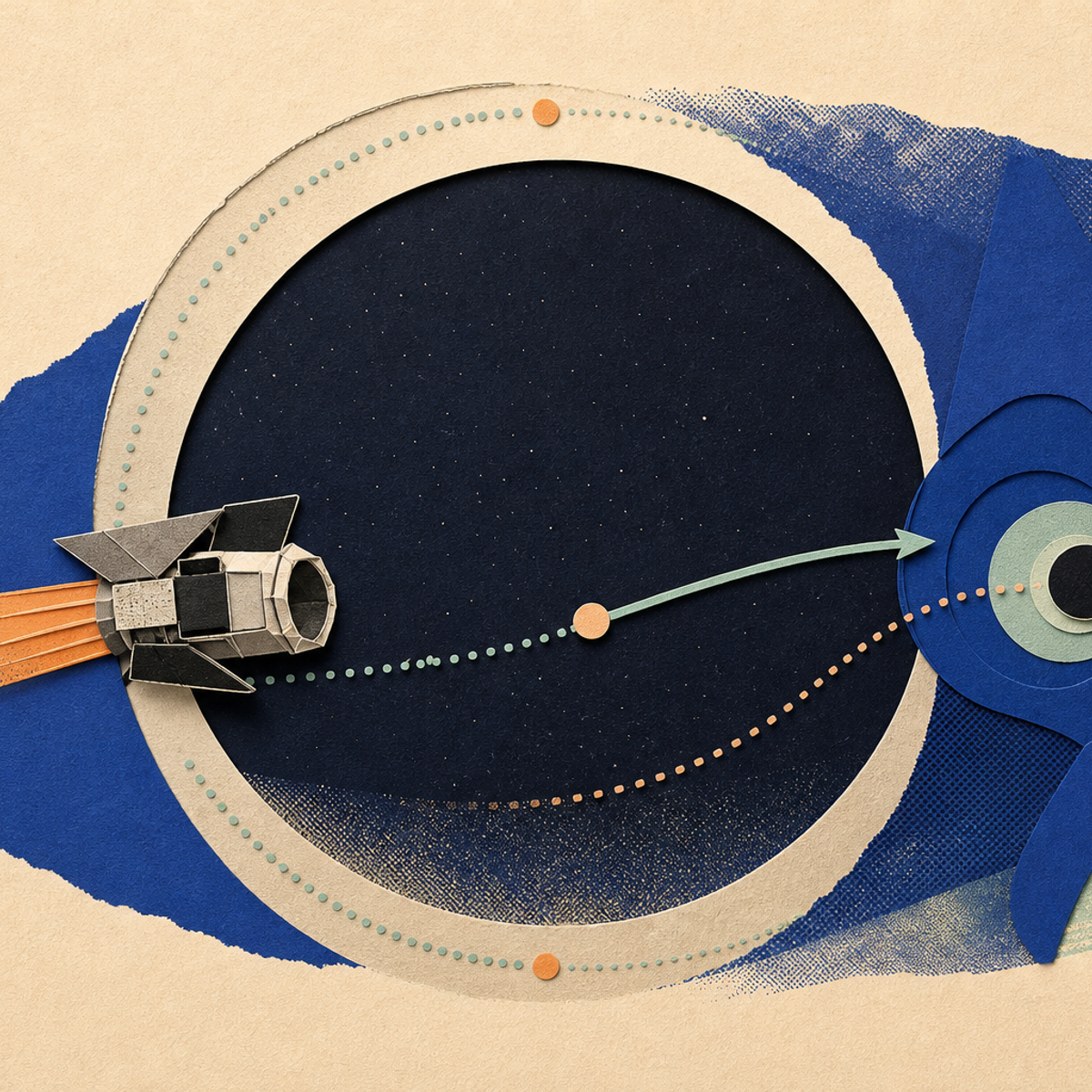
NASA reports Roman’s first course-correction burn on route to L2
NASA says Roman completed its first mid-course correction burn on August 31, 2026, as part of its transit toward L2. The agency projected insertion about 100 days after launch, but the supplied record does not confirm later maneuvers or arrival.